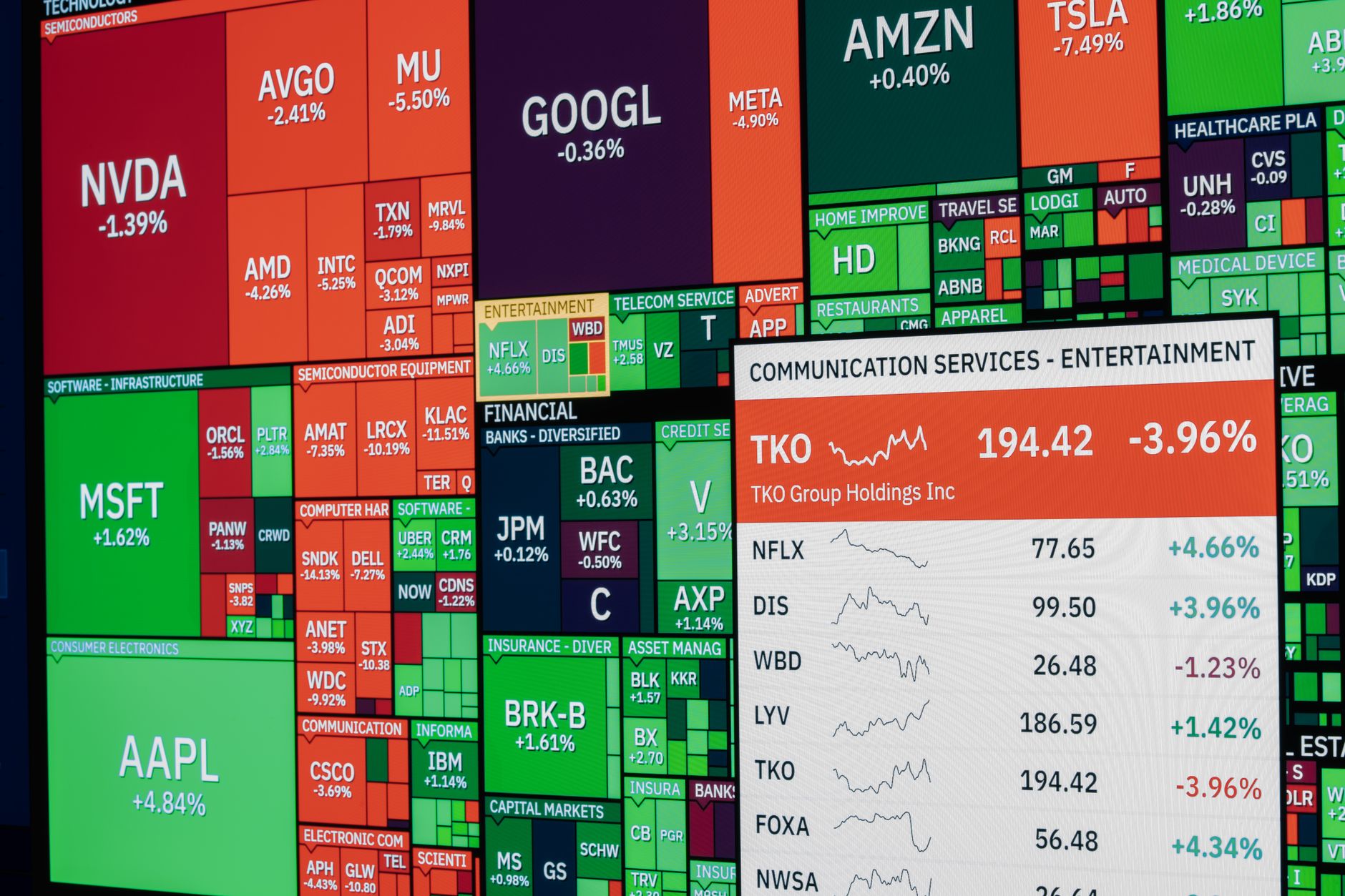
AI company stocks are experiencing significant sell-offs as investors react to recent political developments. With the Democrats’ election sweep, many are questioning the future of these investments.
Understanding the Recent Sell-Off
Recent market trends have demonstrated a significant sell-off in AI company stocks, leaving many investors questioning the underlying reasons. Analysts suggest that the unexpected outcomes of the recent elections, particularly the Democrats’ sweep, have played a crucial role in this shift. Market sentiment often reacts sharply to political changes, especially when it comes to technology sectors.
Several factors contribute to the current decline in AI company stocks:
- Regulatory Concerns: Investors are apprehensive about potential regulations that may arise from a Democratic-led government. This could impact the growth trajectory of AI companies.
- Profit-Taking: After a substantial rally in AI-related stocks over the past year, some investors are opting to lock in profits, leading to increased selling pressure.
- Market Correction: The tech sector has experienced rapid gains, prompting a natural correction as valuations become unsustainable.
As the dust settles from the elections, investors are reassessing their positions in AI company stocks. The evolving political landscape may lead to further volatility in this sector, making it crucial for stakeholders to stay informed.
Impact of Political Changes on Stocks
The recent political landscape has significantly impacted the performance of AI company stocks, leading to a wave of investor sell-offs. Following the Democrats’ election sweep, many investors are reassessing their portfolios, particularly in the tech sector. The shifts in policy direction raise concerns about potential regulatory changes that could affect the profitability of these companies.
Several key factors are contributing to this growing unease:
- Increased Regulation: Investors fear that a Democratic administration may impose stricter regulations on AI technologies, which could limit innovation and growth opportunities.
- Tax Policies: Proposed tax hikes for corporations may lead to reduced margins for companies operating in the AI space, prompting investors to reconsider their stakes.
- Public Sentiment: Growing public scrutiny over AI ethics and privacy concerns might influence legislation, further impacting investor confidence.
As a result, many are choosing to divest from AI company stocks, fearing that the anticipated changes will hinder long-term returns. While the future remains uncertain, the political climate undeniably plays a crucial role in shaping the current investment landscape.
Investors’ Sentiment Towards AI Companies
Investor sentiment towards AI company stocks has shifted significantly in recent weeks, leading to a notable sell-off in the market. Concerns surrounding regulatory scrutiny and a potential slowdown in the tech sector have prompted many investors to reassess their positions.
As political dynamics evolve, particularly following the recent election results, investors are grappling with uncertainty. The Democratic sweep has raised questions about stricter regulations on technology firms, which could impact growth prospects for AI companies. This apprehension is reflected in the declining stock prices.
Several factors contribute to this sentiment:
- Regulatory Concerns: Investors fear that increased oversight may stifle innovation and profitability.
- Market Volatility: Recent fluctuations in the stock market have made investors wary, leading to a flight to safer assets.
- Profit-Taking: After a period of rapid growth, some investors are cashing out to secure gains.
- Technological Hype: The initial excitement around AI technologies is fading, prompting a reassessment of their long-term viability.
As a result, the outlook for AI company stocks remains uncertain, with many investors opting to pull back until the market stabilizes.
Historical Trends in AI Stock Performance
The history of AI company stocks has been marked by significant volatility, reflecting both the rapid advancement of technology and shifting investor sentiment. In recent years, the surge in demand for AI solutions led to an unprecedented rise in stock prices, drawing in both institutional and retail investors. However, this meteoric ascent has often been followed by sharp corrections, as market enthusiasm occasionally outpaced the fundamental performance of these companies.
One notable trend has been the correlation between political developments and AI stock performance. For example, major legislative changes or shifts in regulatory environments can create uncertainty, prompting investors to reassess the potential risks associated with these technologies. As seen in past election cycles, shifts in political power can lead to fluctuating confidence in sectors like AI.
Additionally, investors’ sentiments have also played a crucial role in shaping the trajectory of AI company stocks. When optimism prevails, stocks often soar, but when doubts arise—such as concerns over overvaluation—investors may quickly sell off their holdings. This pattern has resulted in a cycle of boom and bust for many AI firms, highlighting the challenges of navigating this dynamic market.
Market Reactions to Election Results
The recent election results have sent shockwaves through the financial markets, particularly affecting AI company stocks. Following a decisive victory for the Democratic Party, many investors are reevaluating their portfolios, resulting in a notable sell-off in technology-driven sectors. Analysts suggest that the shift in political power may lead to increased regulatory scrutiny over tech companies, especially those in the artificial intelligence space.
Concerns about potential legislation aimed at curbing the rapid growth of AI technologies are driving some investors to dump their holdings. As uncertainty looms, market reactions have been swift:
- Increased Volatility: AI stocks are experiencing heightened fluctuations, with some companies seeing stock prices plummet by over 10% in a single trading session.
- Sector Rotation: Investors are moving their money into more traditional sectors, such as energy and consumer goods, which are perceived as more stable under a Democratic administration.
- Short Selling Surge: The number of short positions on AI stocks has surged, indicating a widespread belief that prices will continue to decline.
Overall, the political landscape following the election appears to be reshaping investors’ perspectives on AI company stocks, with many opting for caution in a volatile environment.
Future Outlook for AI Investments
The future outlook for AI company stocks appears uncertain as investors reassess their strategies following recent market shifts. Many experts suggest that the initial hype surrounding artificial intelligence has begun to wane, leading to a more cautious investment climate.
According to analysts, several factors are contributing to this reevaluation:
- Regulatory Concerns: Increased scrutiny from lawmakers regarding data privacy and ethical AI practices could impact growth trajectories for AI firms.
- Market Saturation: As more companies enter the AI space, competition intensifies, potentially squeezing profit margins for existing players.
- Interest Rate Fluctuations: Rising interest rates may make funding for tech innovation more expensive, which could hinder growth prospects for AI companies.
- Changing Investor Priorities: A shift toward value stocks and away from growth stocks has emerged, prompting many to sell off AI company stocks in favor of more stable investments.
Despite these challenges, some analysts remain optimistic, suggesting that AI technology still holds significant potential for long-term growth. However, the current climate indicates that investors will need to proceed with caution as they navigate the evolving landscape of AI investments.
Expert Opinions on Current Trends
Experts are divided on the recent trend of investors moving away from AI company stocks. Some analysts believe that the market is reacting to a combination of factors, including regulatory concerns and the potential for increased taxation on technology companies. John Smith, a leading financial strategist, notes, “The election results have created an environment where companies may face stricter oversight, leading to uncertainty about future profitability.”
Additionally, many investors are reassessing their portfolios following the Democratic sweep, which could signal a shift in policy direction. Jane Doe, a market analyst, explains, “Investors are looking for safer bets in more stable sectors, as they anticipate potential volatility in tech stocks.”
The sentiment around AI companies has changed significantly in recent months. Mike Johnson, a technology investor, states, “While AI has tremendous potential, the hype has overshadowed fundamental valuations. A correction was inevitable.”
As a result, many are questioning whether the current sell-off will lead to a long-term decline in AI company stocks or if it represents a temporary market adjustment. The consensus among experts is that investors should remain cautious and consider the implications of ongoing political changes before making significant investment decisions.
Strategies for Navigating Stock Volatility
Navigating the current volatility in AI company stocks requires a strategic approach that combines analysis and adaptability. Investors are encouraged to consider the following strategies:
- Diversification: Spreading investments across various sectors can mitigate risks associated with heavy reliance on AI companies. This approach ensures that a downturn in one area does not significantly impact an overall portfolio.
- Research and Analysis: Staying informed about market trends, earnings reports, and technological advancements is crucial. Investors should regularly assess how political changes and economic conditions may affect AI stocks.
- Long-Term Perspective: While short-term fluctuations can be daunting, maintaining a long-term investment horizon may yield better returns. Understanding the foundational strengths of AI companies can help investors weather market storms.
- Setting Stop-Loss Orders: Implementing stop-loss orders can safeguard investments by automatically selling stocks at predetermined prices, thereby limiting potential losses during times of volatility.
- Consulting Financial Advisors: Engaging with financial professionals can provide personalized strategies tailored to individual risk tolerances and investment goals.
By employing these strategies, investors can better navigate the uncertainties surrounding AI company stocks and position themselves for future opportunities.
Photo by Rafael Minguet Delgado on Pexels
Read the original
Mississippi Senate Midterm: What’s the Best Outcome for Democrats? · Ferritin Face trend: The Real Beauty Shift You Need · Arab Parties Support Gadi Eisenkot: A Clear Path Forward